At the end of December, as the longest night of the year slowly seeps into the room, I light candles and make a Didukh. I weave this keeper of ancestral stories out of dry wheat stalks and distant memories of a sheaf that my grandfather brought into the house on Christmas Eve. “Didukh in the house, trouble out of the house,” he would say as he placed it under the icons framed by rushnyks, embroidered towels that decorated the walls of every room at my grandparents’ place.

Often described as a traditional Ukrainian Christmas decoration, the meaning of Didukh is much deeper. It is a ritual practice that traces its origins to pre-Christian times when our ancestors honoured the change of seasons and connection to the land. Wheat and other grains, like rye and oats, have always been essential to the survival of people who have called this land – now known as a breadbasket of Europe – home. To celebrate the return of light during the winter solstice, they sacrificed a sheaf from their autumn harvest, either the first or the last one, to show gratitude for a good year and ask for an abundant yield in the future.
The name “Didukh” means “Grandfather’s Spirit”. It signifies connections between generations, a connection that is reinforced through many different practices during this time of the year. People often visit the cemetery on Christmas Eve and light candles on the graves of their loved ones. In some parts of Ukraine, it is customary to lightly blow on chairs and benches before sitting down – to avoid planting yourself on top of any spirits. There’s always an extra plate set for our departed relatives, and the food is kept on the table overnight so they can feast after everyone goes to bed.
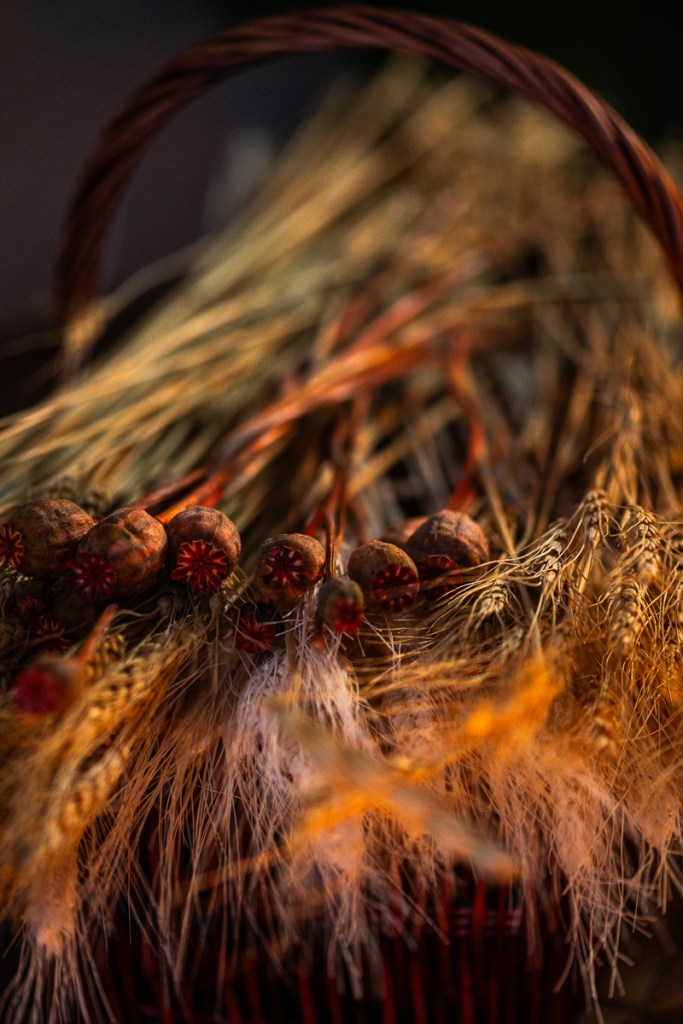
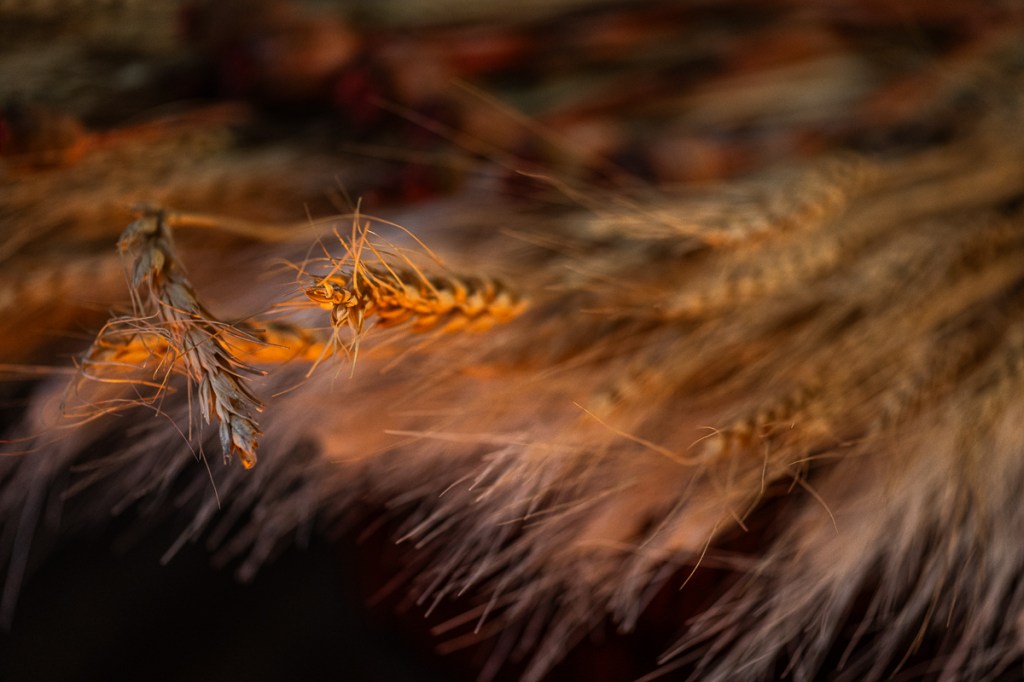

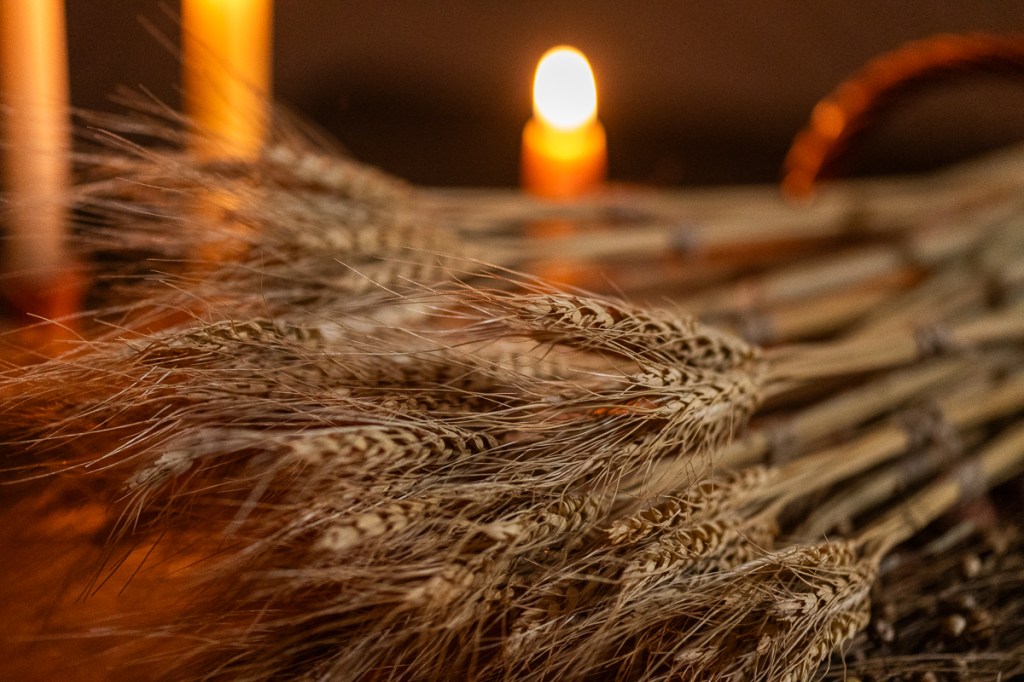
As I make our Didukh, I give thanks to the hands that grew these stalks, harvested and dried them, and then delivered to our apartment.
Securing wheat, rye or oats for a Didukh is the first step. It was easy for my grandparents who simply saved a sheaf of wheat from their field; for me, with nothing but a small container garden on our fifth-floor balcony in Toronto, the task is more complicated. After some research, I find a supplier on Etsy located close to our home to minimize the distance the wheat must travel to our doorstep. As I make our Didukh, I give thanks to the hands that grew these stalks, harvested and dried them, and then delivered to our apartment.


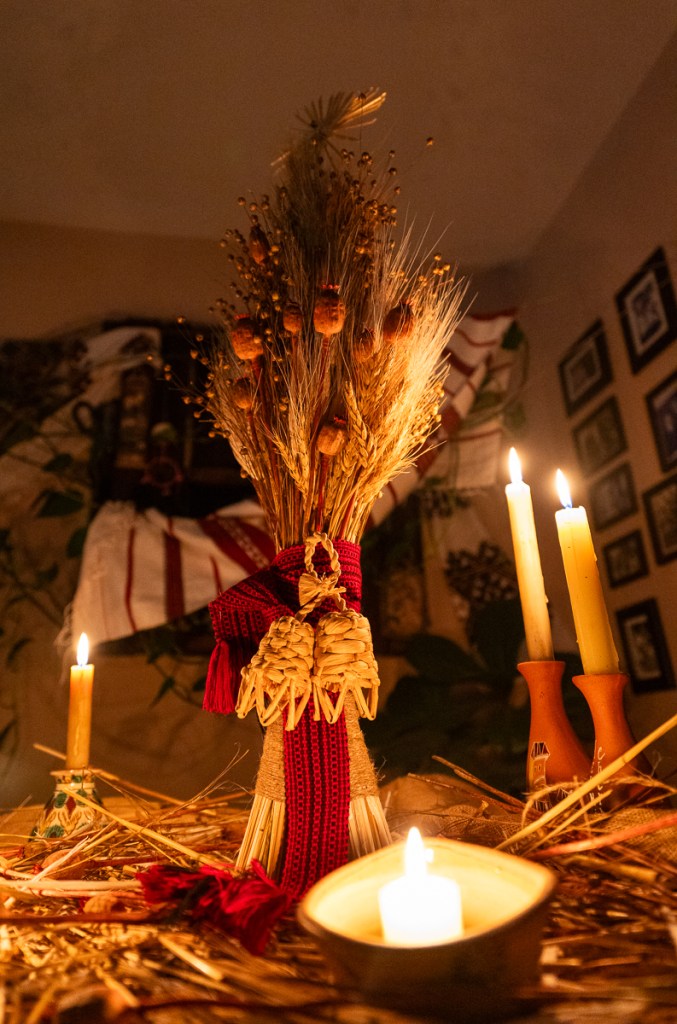
There’s no single way to make a Didukh. Each one is unique and reflects the maker’s preferences and wishes. Some Didukhs are simple sheaves, others are elaborate constructions with multiple layers and branches, which explains its other name – a Bread Tree. There are, however, some basic rules that most Didukh makers follow. First, wheat stalks need to be separated into bunches of seven to signify seven generations, seven days of the week, seven colours of a rainbow.
According to the ancient lore: the fancier the Didukh, the better the harvest.
A Didukh often has three legs – the roots that connect us to our past. The middle part is the present realm of people and other living beings, while the top, heavy with seeds, looks toward the future and next year’s harvest. One popular design replicates the year. It includes four layers symbolizing the seasons: each layer features three bundles (months) made of four smaller bunches (weeks) containing seven stalks (days). At the end, Didukhs are often decorated with colourful ribbons, straw ornaments, dried flowers and herbs, which add new layers of meaning. According to the ancient lore: the fancier the Didukh, the better the harvest.
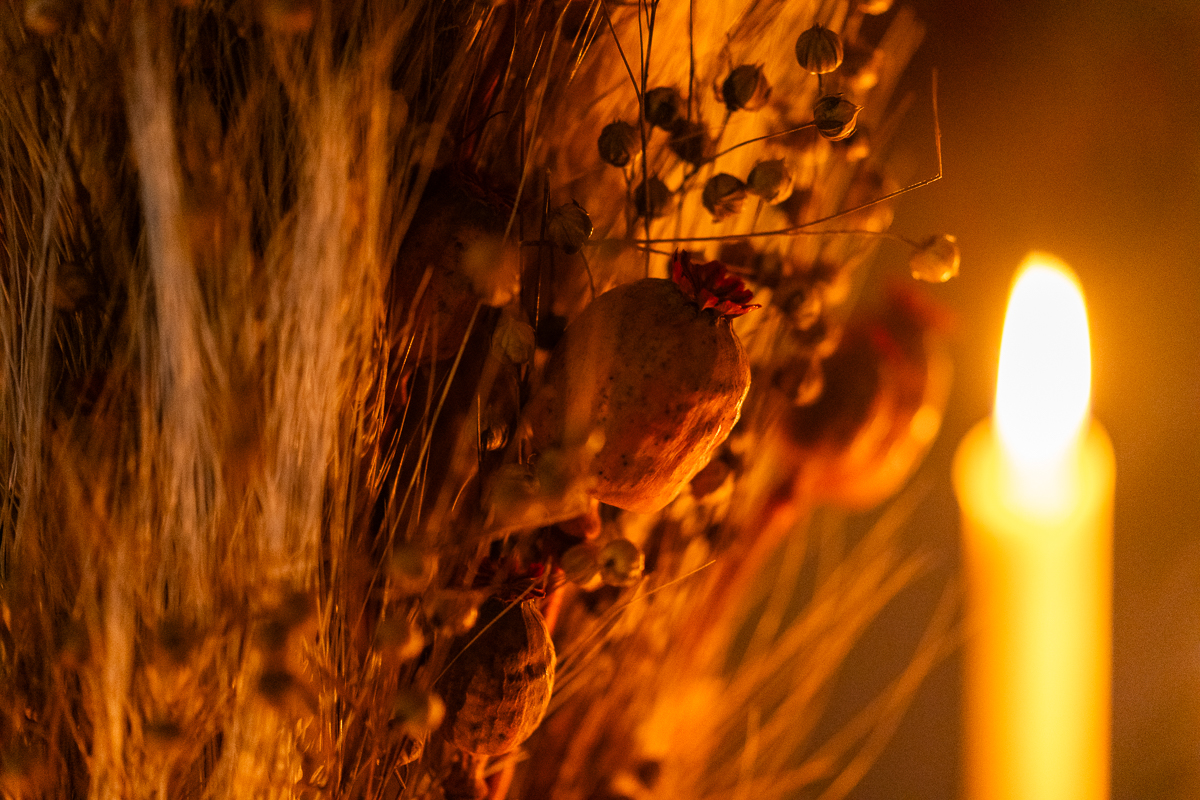
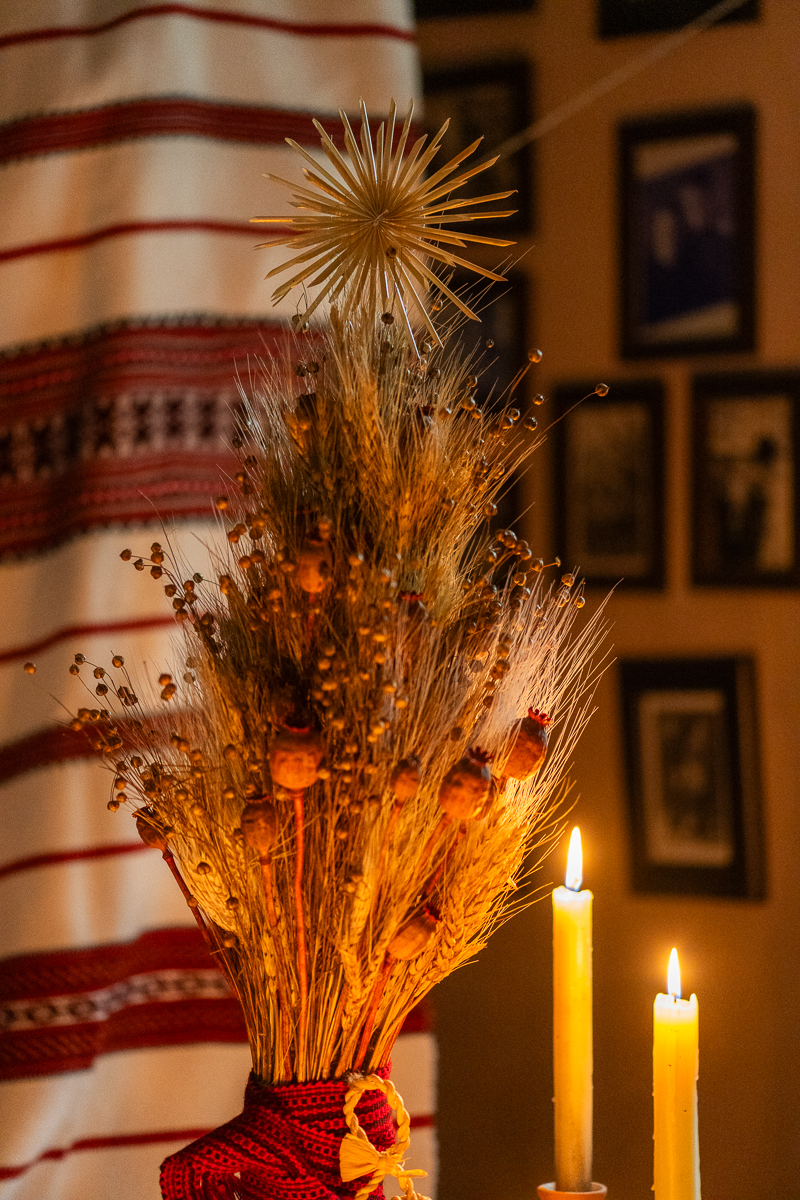
I am still learning the many ways to make a Didukh so ours is simple – a sheaf rather than a tree. I add linum meant to ward off the evil and dry poppy pods to protect from headaches. After I am done, I place it at the head of the table, under my grandmother’s rushnyk and black-and-white photos of our parents and grandparents. I call on them to come visit and bring their stories.
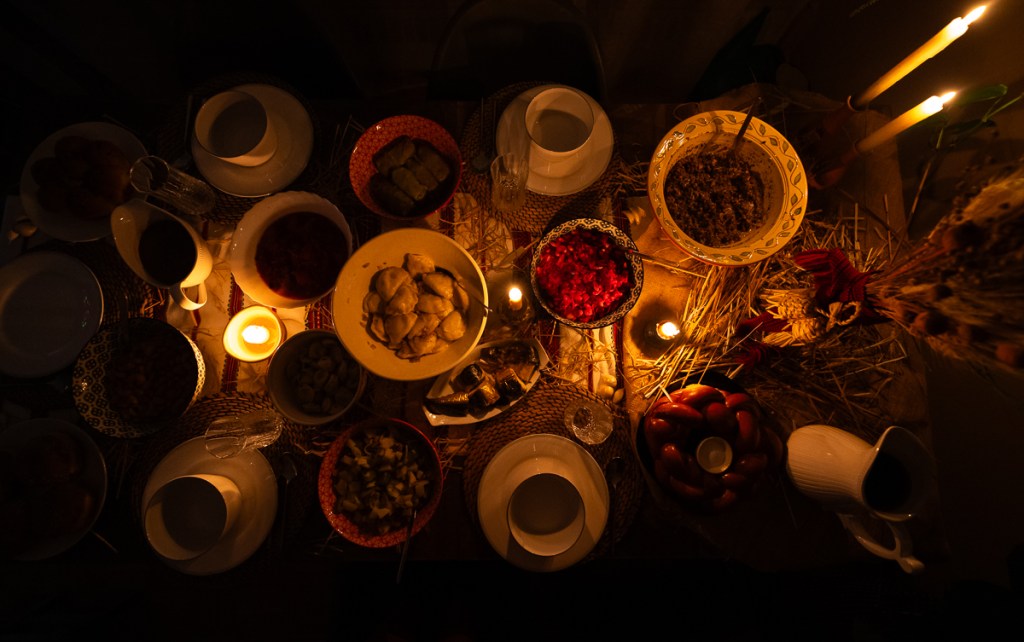
It is customary to make twelve dishes for the Christmas Eve dinner, all cooked from simple plant-based ingredients. Honey and fish are the only exceptions. While the types of dishes may vary depending on the region, every Christmas Eve dinner starts with Kutia. Made with wheat berries, ground poppy seeds, walnuts, honey, raisins or dried fruit, this ritual dish symbolizes our connection with the world of the dead. In addition to Christmas, Kutia is also served during wakes.
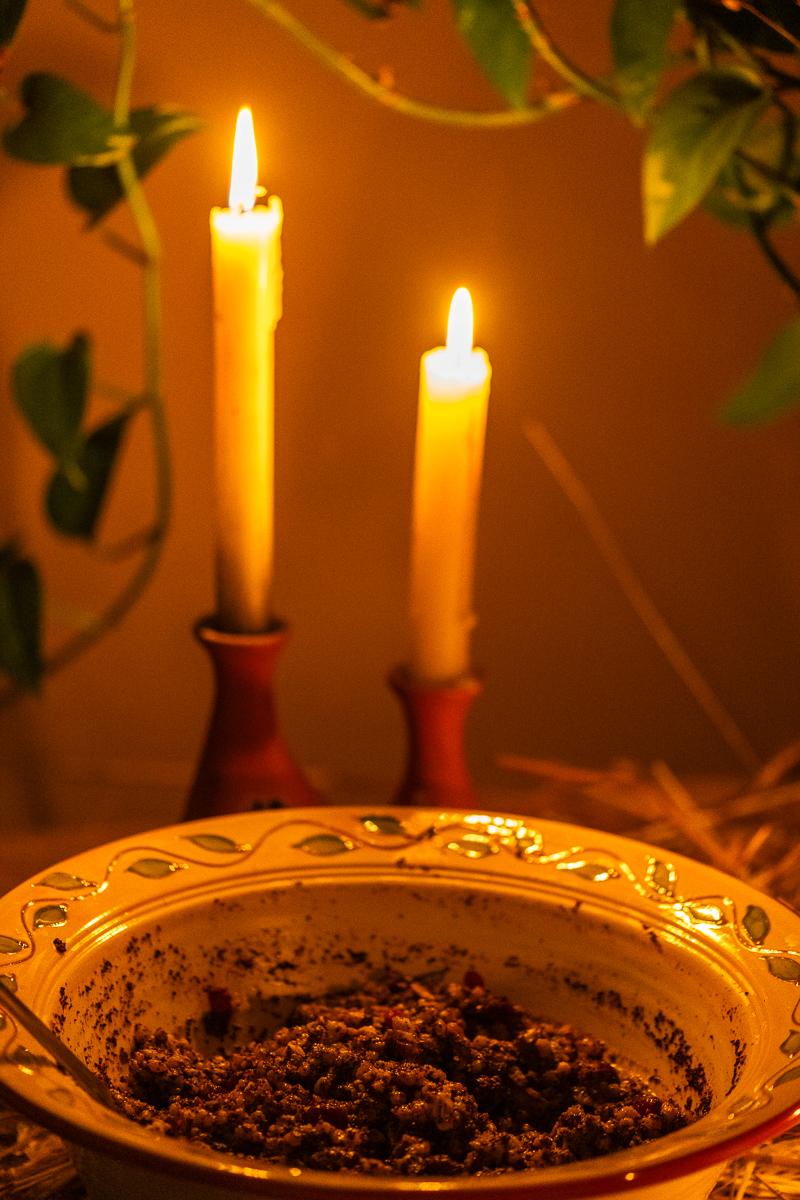

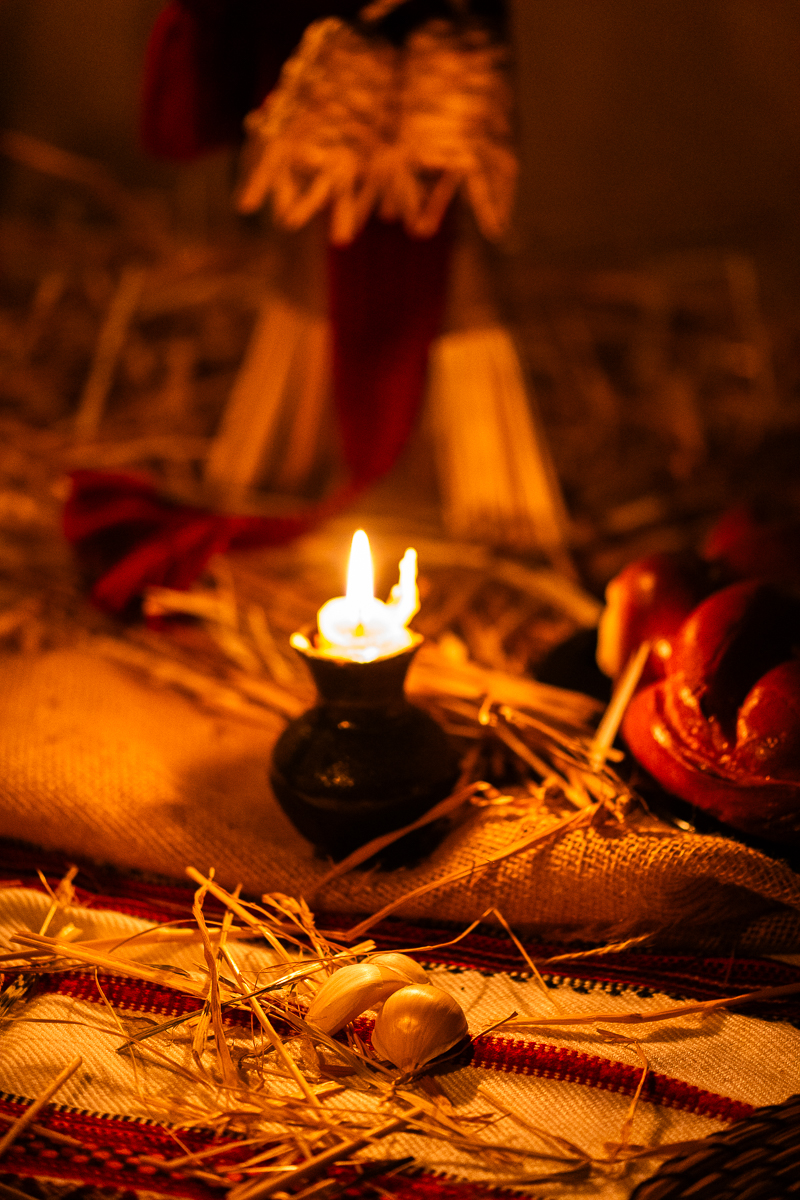
After placing Didukh in the corner, my grandfather would bring a bale of hay into the house, spread it on the floor and put some on the table. According to ancient beliefs, it guaranteed prosperity in the new year; for my brother, my cousins and me, it was an invitation to jump and roll around. With no access to fields of grass in Toronto, we try to pick some hay and straw during our visits to the farm. It is not enough to cover the floor of our apartment but sufficient to put on the table. Cloves of garlic placed in four corners are meant to ward off sickness.
Over the last few years, with the war raging in my home country, the meaning behind Didukh has deepened and acquired new layers.
When we moved to Canada, we brought many of these practices with us. Reviving traditions passed through generations in our apartment in Toronto has always helped me feel connected to the land that nurtured and shaped me. Over the last few years, with the war raging in my home country, the meaning behind Didukh has deepened and acquired new layers.
As we make our Didukh, I tell my son about celebrating Christmas with my grandparents. He fills me in on the wheat’s reproductive cycle and how it self-pollinates with the help of the wind. We listen to Ukrainian Christmas carols while we work, many of which have roots in paganism, later incorporated into Christianity. Even the Ukrainian name for caroling is traced to ancient deity Kolyada, the god of winter sun.
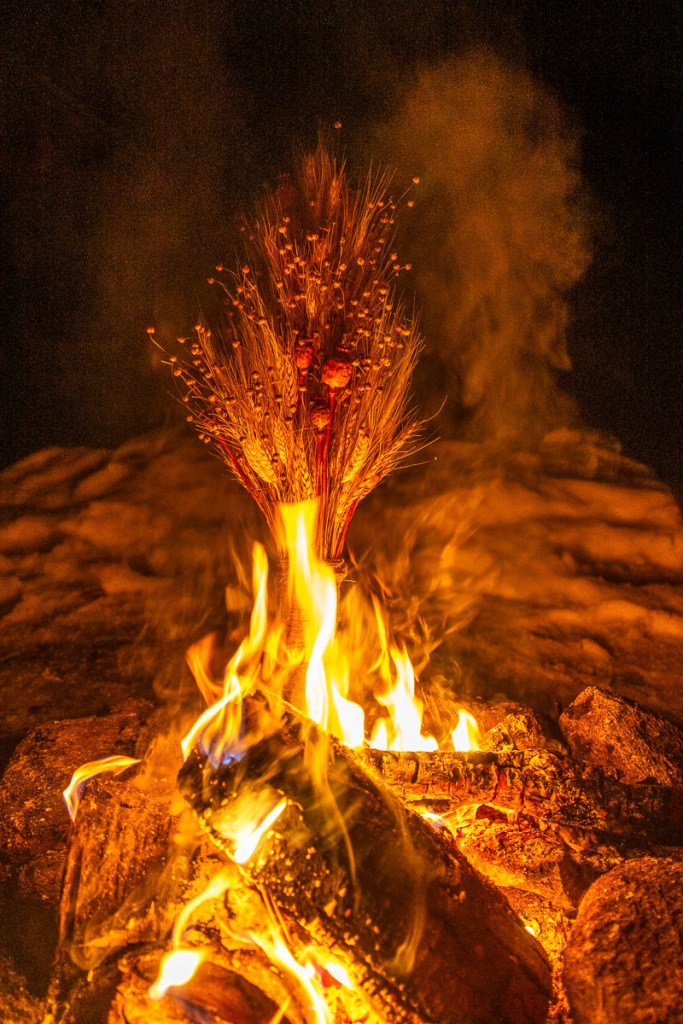
Didukh stays in the house through the winter celebrations, usually until New Year’s or the Feast of Jordan on January 6. After that, it is threshed, the seeds are preserved for future planting, and the rest is burned to release our ancestors back into the spirit world and call for the arrival of spring.
Over the last few years, as we burn our Didukh on New Year’s Day, it often feels like spring has already arrived. With rain and fog just as likely as snow and freezing temperatures, winter celebrations marked by unpredictable weather have now become the norm, even in places that used to be famous for their unapologetically harsh winters.
As I build a Didukh with my family during the winter solstice, I return to its roots of celebrating the eternal rebirth of light.
As transitions between seasons become increasingly porous, I hold on to the ancient ritual of making a Didukh. I revel in the heaviness of a wheat sheaf in my hands, an embodiment of nature’s cycle condensed into hard, oval seeds swaddled in dry husks. The tiny kernels chant of summers past and those yet to come. They rustle of autumnal crispness and whisper of winter’s lull. All the songs that will soon be poured into new plants. As I build a Didukh with my family during the winter solstice, I return to its roots of celebrating the eternal rebirth of light. I tap into my ancestors’ wisdom and their reverence of the Sun – the life-giving force, a celestial keeper of Earth’s rhythm, a spotting point in our constantly shifting world.
 Stories of Entangled Life