I turn off the alarm clock on my phone and burrow deeper into my sleeping bag. I can hear my husband do the same next to me. It’s shortly before seven on the second day of fall and we are on our impromptu canoe trip in Algonquin. After a beautiful misty sunrise paddle the previous morning, we decided to repeat it again today but neither of us seems to be in a hurry to leave the warmth of our tent. After about ten minutes of debating whether I should go back to sleep, I finally emerge from my cocoon and unzip the tent only to bump against a ghostly white wall.
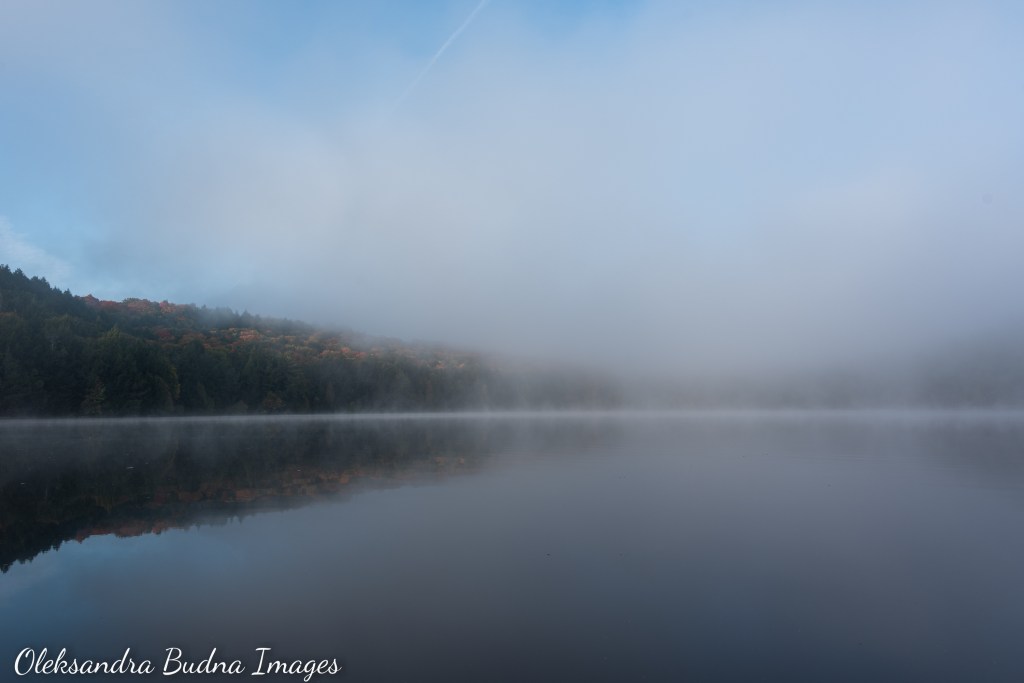
While we were sleeping, the world has been reduced to a circle no more than ten metres in diameter.

It doesn’t take us long to get dressed and grab a water bottle and a camera. Soon we are pushing our canoe into a mass of microscopic droplets packed so densely together that it feels almost solid in texture.
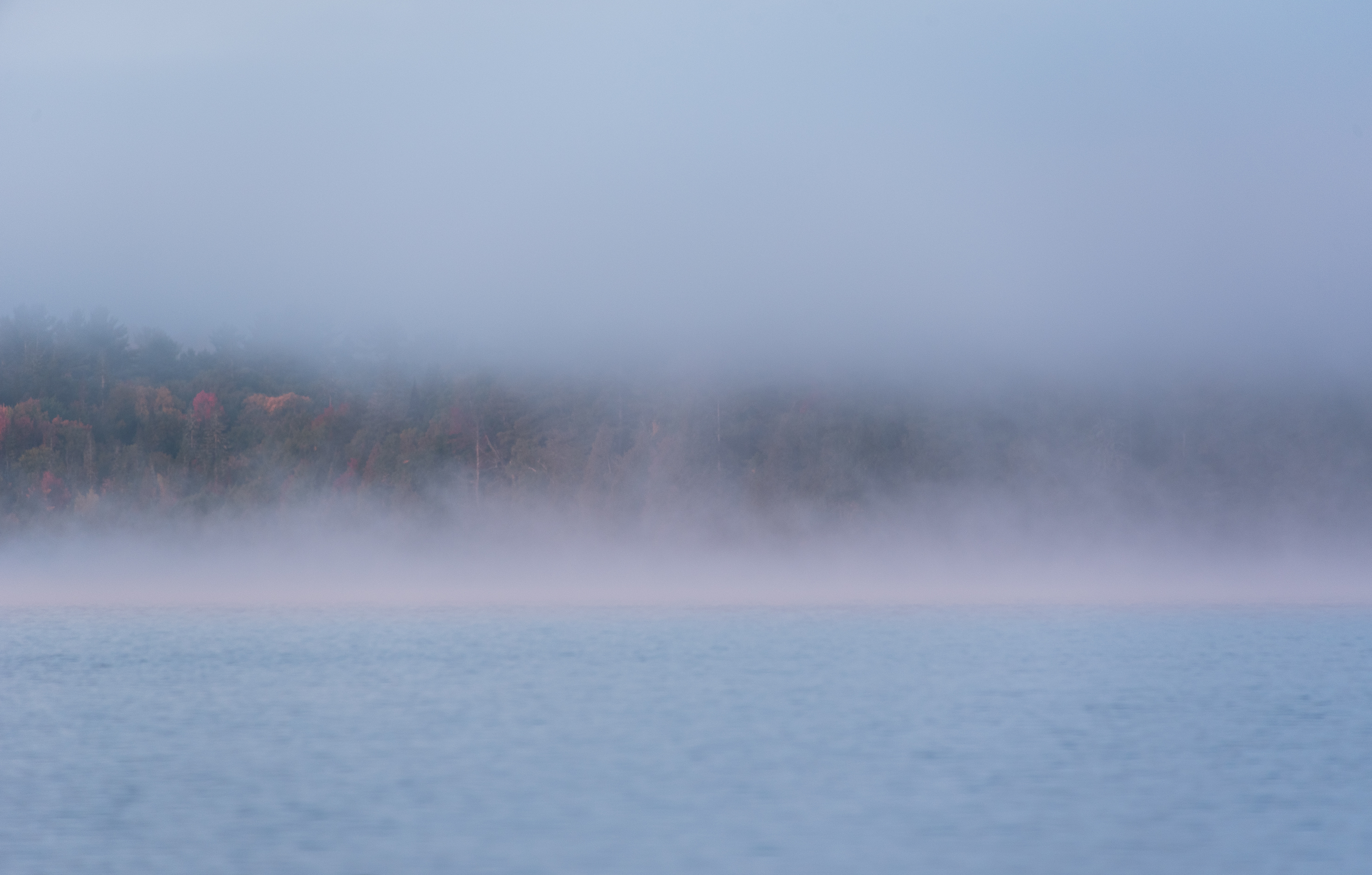
The bow cuts into this blank space with no discernible horizon line, our paddles slice through the thickness, until we are swallowed by the emptiness, dissolved in this cloud tethered to the surface of the lake.
From time to time, as we get closer to the shore, hazy tree outlines slowly come into view like a black-and-white print developing in those pre-digital days of photography. We keep paddling and watch the process in reverse – the world being slowly erased until we are staring at an empty bluish-white canvas again.


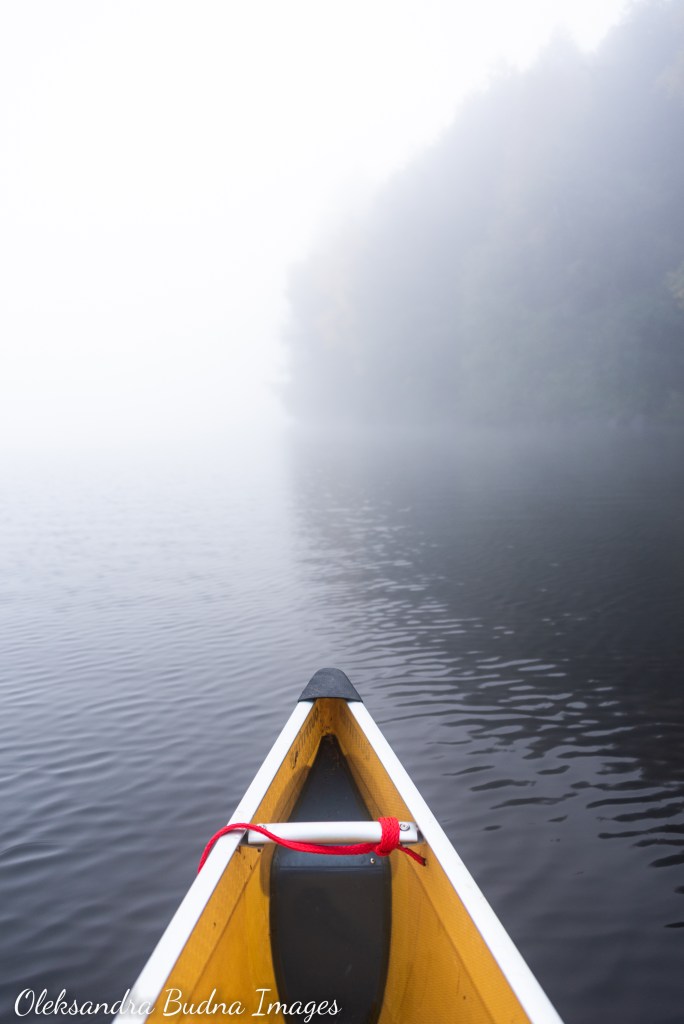
With its ability to distort reality and render familiar places unrecognizable, fog is often associated with confusion, uncertainty, disorientation and fear of getting lost. To me, this blank canvas invites the wildest fantasies and dreams.
In many cultures fog and its less powerful sibling, mist, are seen as mediators between reality and realms of visions, illusions and apparitions.
In Dutch folklore, the spirits of wise women known as Witte Wieven are believed to float through the air in a misty form and lure people away never to be seen again. In Irish stories, the féth fíada is a special kind of fog that ensures the Tuatha Dé Danann, a supernatural race of mythical beings, remain invisible to humans. In my native Carpathian Mountains, mist is seen as forest spirits dancing and if you look close enough you can make out their outlines. I peer into the ghostly whiteness hoping to catch sight of these mythical creatures but they remain well hidden under the cover of the fog.

We slowly move through this unmapped land; widening circles set off by our paddles push against its boundaries and disappear into infinity. At some point, I start wondering if we’ve crossed into Niflheim, one of the nine worlds in Norse mythology known as the World of Mist, a realm of the dead – those who passed away of old age and sickness and were denied access to Valhalla. I half expect Charon, the ferryman of the deceased from a different mythology born down by the Mediterranean, to emerge out of the blurriness.
I think of my grandparents, my aunt, my father who passed away only a few weeks ago – their soothing presence almost palpable behind this gauzy veil.

By our calculations, it’s well past sunrise. We point our canoe in the direction where we saw the sun roll out from behind the trees the previous morning. Or at least we think we do. Without familiar contours of the lake or a compass, telling directions is a guessing game. We scan our limited surroundings but there are no signs of our celestial giver of light.
This liminal space at the intersection of so many opposites – cold and warm air, night and day, summer and fall – seems to exist outside of time.
Detached from familiar anchors, this void contains both past and future. It offers limitless possibilities as we transition through seasons both in nature and in our own lives. So I embrace the void with its promise of new worlds.

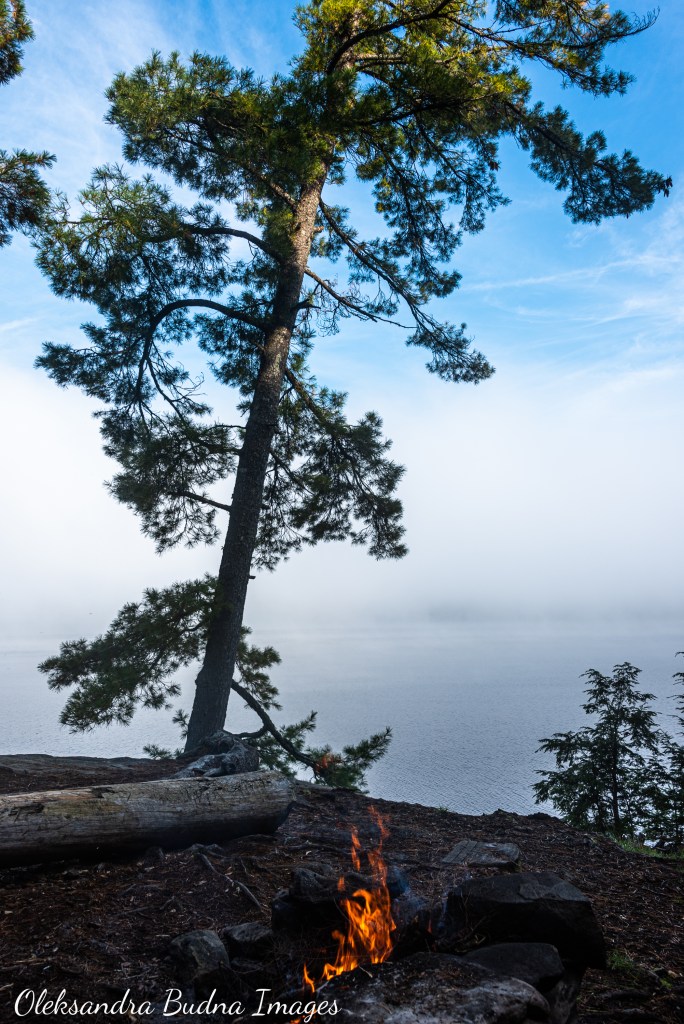
Leaves and pine needles drift by, their trails erased by the fog. Eventually, the sun breaks through and paints the world golden. We watch a glowing orb suspended in the air, its twin bobbing in the water down below. The sun’s warmth sips through the mesh of the fog and spills into the lake and surrounding forest. We turn around to make our way back.
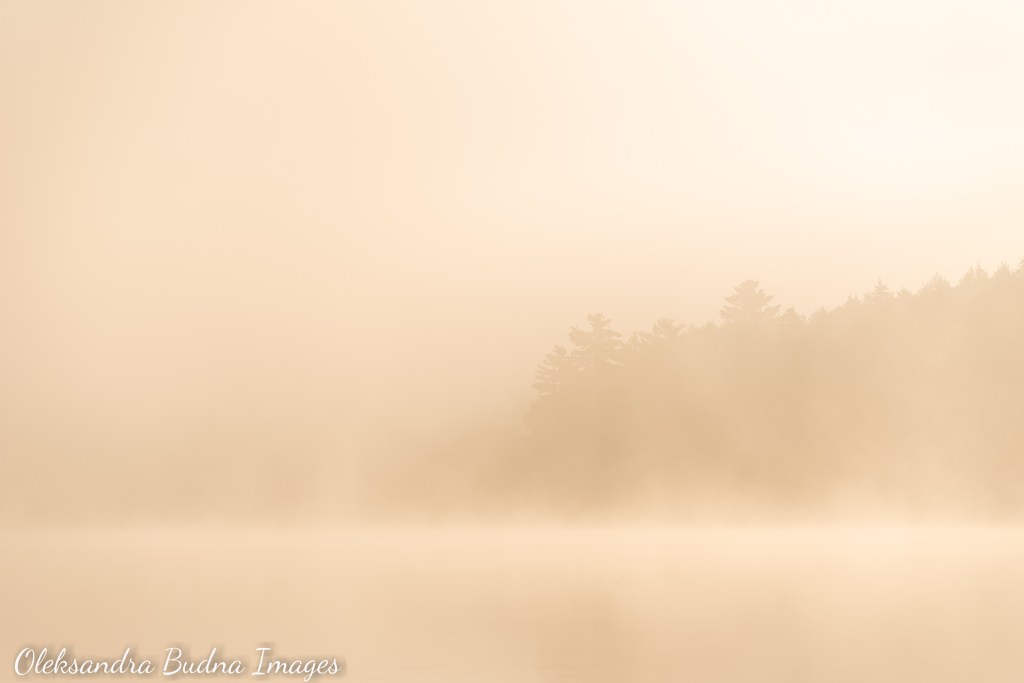

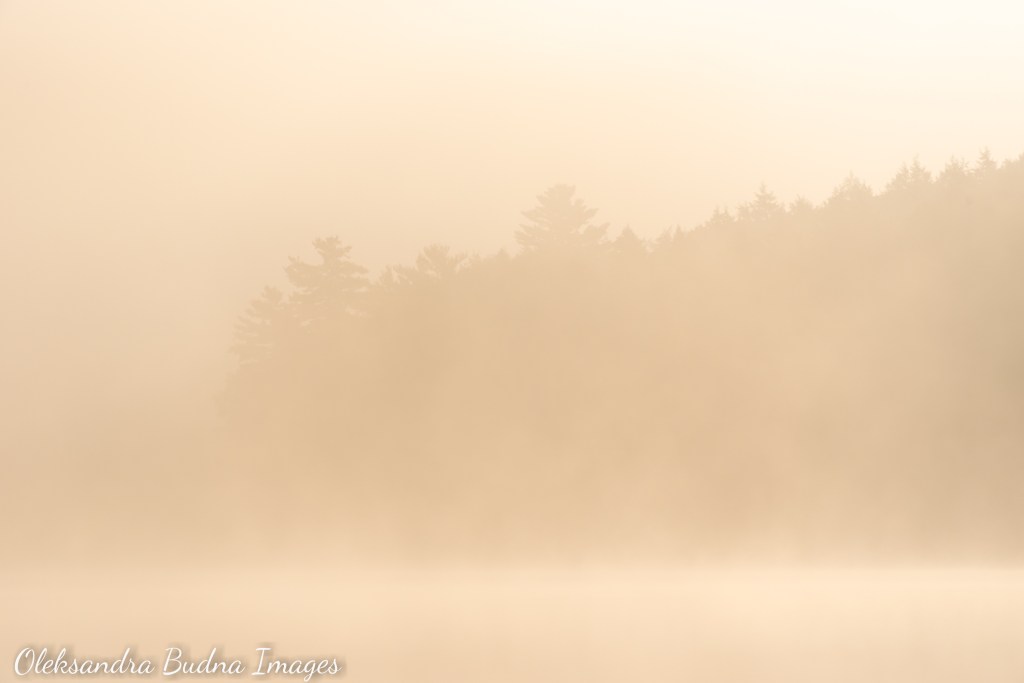
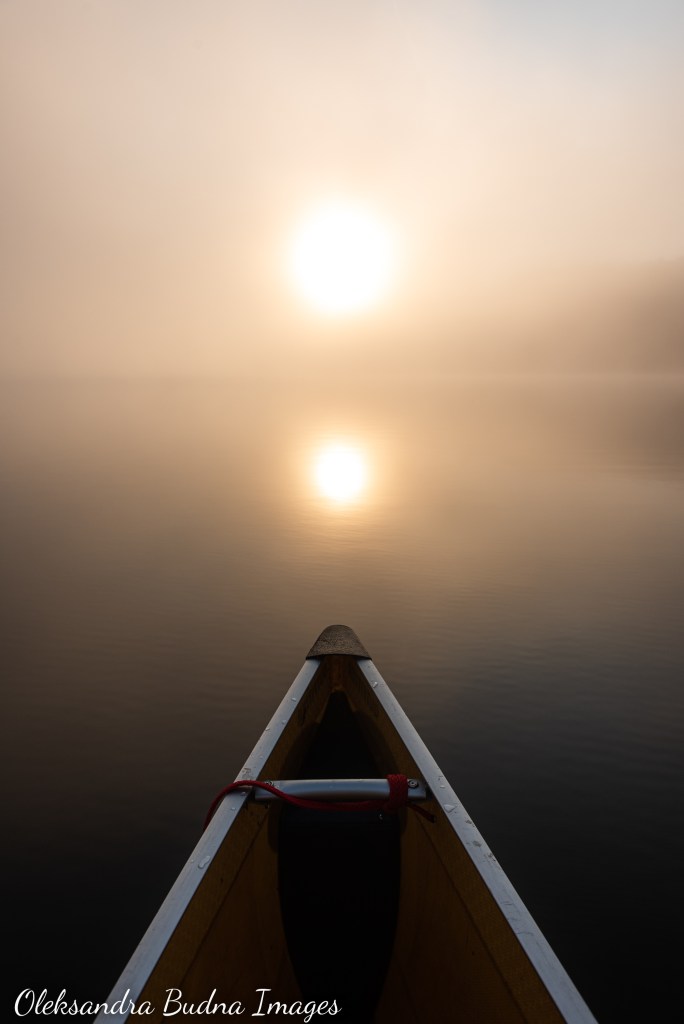
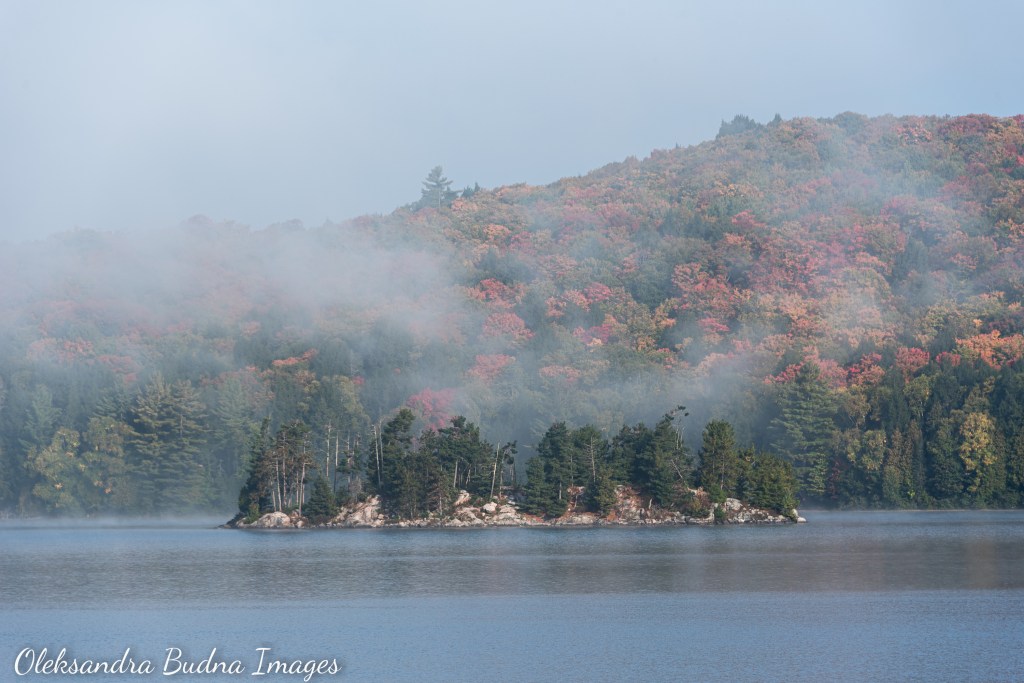
As we paddle to our campsite, the world starts to take shape. The fog is now less of a solid curtain and more of a gossamer fabric with patches of orange and yellow shining through its fraying holes. It takes another hour or so for it to disperse completely. We drink our morning coffee watching the last of the wispy forest spirits frolic their way into eternity.



 Stories of Entangled Life